Chemotherapy in Hyderabad: What to Really Expect, Step by Step
“Chemotherapy” a word that lands heavy the moment you hear it. Most people picture the worst before they know any of the facts and that fear is often the hardest part, harder than the treatment itself usually turns out to be.
If you or someone you love has just been told chemotherapy is next, this is the gist of everything you’re probably wondering: what it actually is, how it works, what a session looks like, and what support looks like once treatment starts. It’s written from what we see every day at Horizon Cancer Care in Banjara Hills, Hyderabad, where Dr. Srinivas Prasad Perla and our oncology team have walked close to 3,000 patients through this exact moment.
So, What Is Chemotherapy, Really?
In simple terms, chemotherapy is medicine that stops cancer cells from growing and spreading. It travels through your bloodstream. This is exactly why it works well even when cancer has moved beyond where it started.
You might get it as:
• A drip (IV infusion) — the most common route
• Tablets or capsules you take at home
• An injection
• Sometimes a mix of the above
How often and for how long depends entirely on your diagnosis — there’s no one-size-fits-all schedule, and we will walk you through yours before treatment begins.
How Does It Work?Actually
Cancer cells grow faster than normal cells. Chemotherapy is designed to target that fast growth. In practice, this can mean:
• Killing the fast-growing cancer cells
• Shrinking a tumour before or instead of surgery
• Lowering the chance of cancer coming back
• Easing symptoms and improving quality of life in advanced cases
Newer chemotherapy drugs are far more precise than the ones from even ten years ago, which is part of why side effects today are generally more manageable than what people remember or fear.
When Do Doctors Actually Recommend It?
Chemotherapy isn’t used the same way for everyone. Depending on your case, your oncologist might suggest it:
• Before surgery — to shrink the tumour and make it easier to remove
• After surgery — to clear out any stray cancer cells left behind
• Alongside radiation — for cancers that respond better to the combination
• As the main treatment — common for blood cancers like leukaemia and lymphoma
• To relieve symptoms — in advanced cancers, to ease pain and improve daily life
If you want the more detailed clinical version, our chemotherapy treatment page covers it, or you can simply book a consultation and ask us directly.
What a Day of Chemotherapy Actually Looks Like
Not knowing what to expect is often more stressful than the treatment itself. Here’s the walkthrough.
Before treatment starts
We review your history, scans, and blood work, and confirm the stage of your cancer. This shapes your entire treatment plan — the drugs, the dose, how many cycles, and how often.
On treatment days
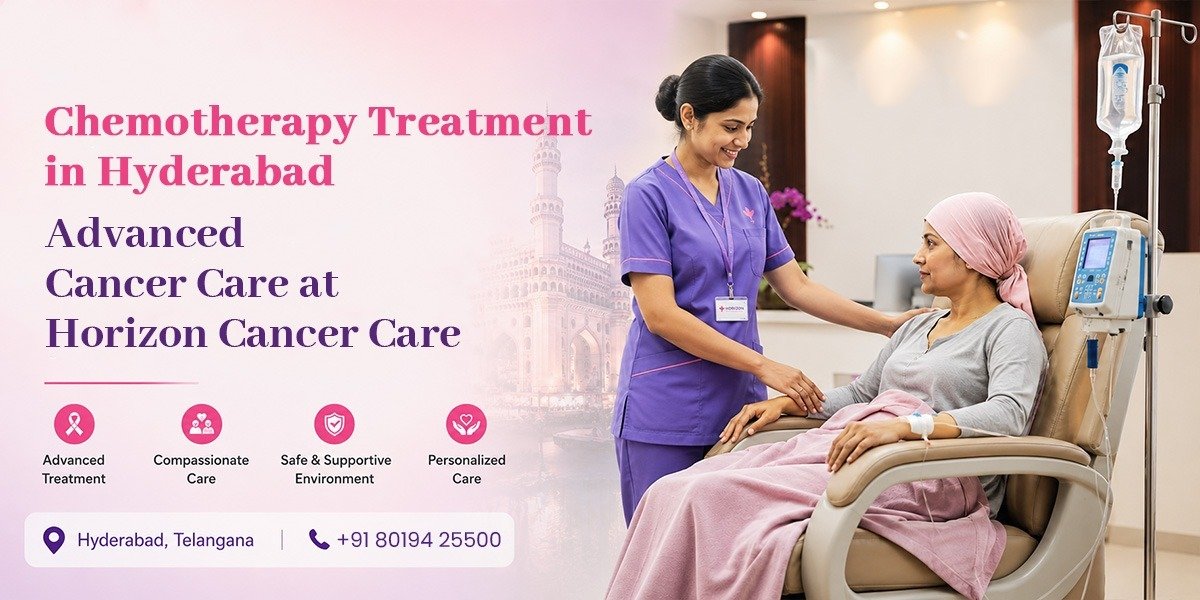
You’ll sit in our chemotherapy daycare unit in Banjara Hills, where an oncology nurse manages your infusion and checks on you throughout. Most sessions are calm and uneventful — our rooms are built for comfort along with clinical efficiency.
In between cycles
You’ll have regular blood tests and scans so we can see how your body is responding, and adjust the plan if needed.
After treatment ends
Follow-up continues post chemotherapy. You’ll continue check-ins to track recovery and catch any early signs of recurrence — this is part of our long-term survivorship programme.
Let’s Talk About Side Effects
This is usually the biggest worry. Common side effects include:
• Feeling tired or low on energy
• Hair thinning or loss (but not with every drug)
• Nausea
• Lower appetite
• Mouth sores
• A temporary dip in blood counts, which can raise infection risk
The good news: supportive care has come a long way. We use preventive medication, diet support, and close monitoring to keep these effects as manageable as possible, so you can keep going about your daily life wherever you can.
Which Cancers Is Chemotherapy Used For?
At Horizon Cancer Care, we use chemotherapy — often alongside immunotherapy or targeted therapy — for a wide range of cancers, including breast, lung, ovarian, cervical, colorectal, pancreatic, liver, stomach, head and neck, prostate, bone, sarcoma, lymphoma, leukaemia, and multiple myeloma, among others. Every plan is built around your specific diagnosis, not a standard protocol.
You’re Not Just Getting Medicine — You’re Getting a Team
Treatment isn’t only about the drugs. Alongside chemotherapy, patients at Horizon Cancer Care also get:
• A dietitian/ Diet chart to help you eat well through treatment
• Counselling for the emotional side — for you and your family
• Pain and symptom management
• Clear, simple explanations at every step, so nothing feels like a surprise
Don’t Wait on the Warning Signs
Catching cancer earlier almost always means simpler, more effective treatment. If you notice any of these, it’s worth getting checked without delay:
• Unexplained weight loss
• Fatigue that doesn’t go away
• Unusual bleeding
• A new lump or swelling
• A cough that lingers
• Trouble swallowing
• Changes in bowel or bladder habits
None of these automatically mean cancer — but they’re always worth a proper check by an oncologist rather than a guess.
You Don’t Have to Figure This Out Alone
A cancer diagnosis can feel like the ground shifting under you. But you don’t have to navigate chemotherapy, side effects, or scheduling on your own — that’s exactly what our team at Horizon Cancer Care, Banjara Hills, is here for.
If chemotherapy is on the table for you or someone you love, book a consultation with our oncology team, and we’ll walk you through exactly what your treatment would look like.
Horizon Cancer Care | Banjara Hills, Hyderabad – 500034 | Ph: 9573605000 | horizoncancercare.com
FAQs
Does chemotherapy hurt?
Not really — the treatment itself isn’t painful. The IV insertion might pinch, and side effects vary by person and drug, but chemotherapy itself isn’t a painful process.
How many sessions will I need?
There’s no fixed number — it depends on your cancer type, stage, and how you respond. Your oncologist will map out your specific schedule before you start.
Can I keep working during treatment?
Many patients do, especially between cycles. It really comes down to how you’re feeling and what your doctor advises for your specific case.
Will I definitely lose my hair?
No — it depends on the specific drugs in your regimen. Some cause hair loss, many don’t. Ask your oncologist about your particular plan.
What does chemotherapy cost in Hyderabad?
It varies a lot based on cancer type, stage, drugs used, and number of cycles. We’ll give you a clear cost estimate during your consultation, along with guidance on insurance and PMJAY support where applicable.
Why choose Horizon Cancer Care for chemotherapy?
Because you get more than a drug protocol — you get an experienced oncology team led by Dr. Srinivas Prasad Perla, a comfortable dedicated chemotherapy unit in Banjara Hills, and support that covers nutrition, counselling, and follow-up, all under one roof.