Breast Cancer Treatment in Hyderabad: Does Everyone Need Chemotherapy?
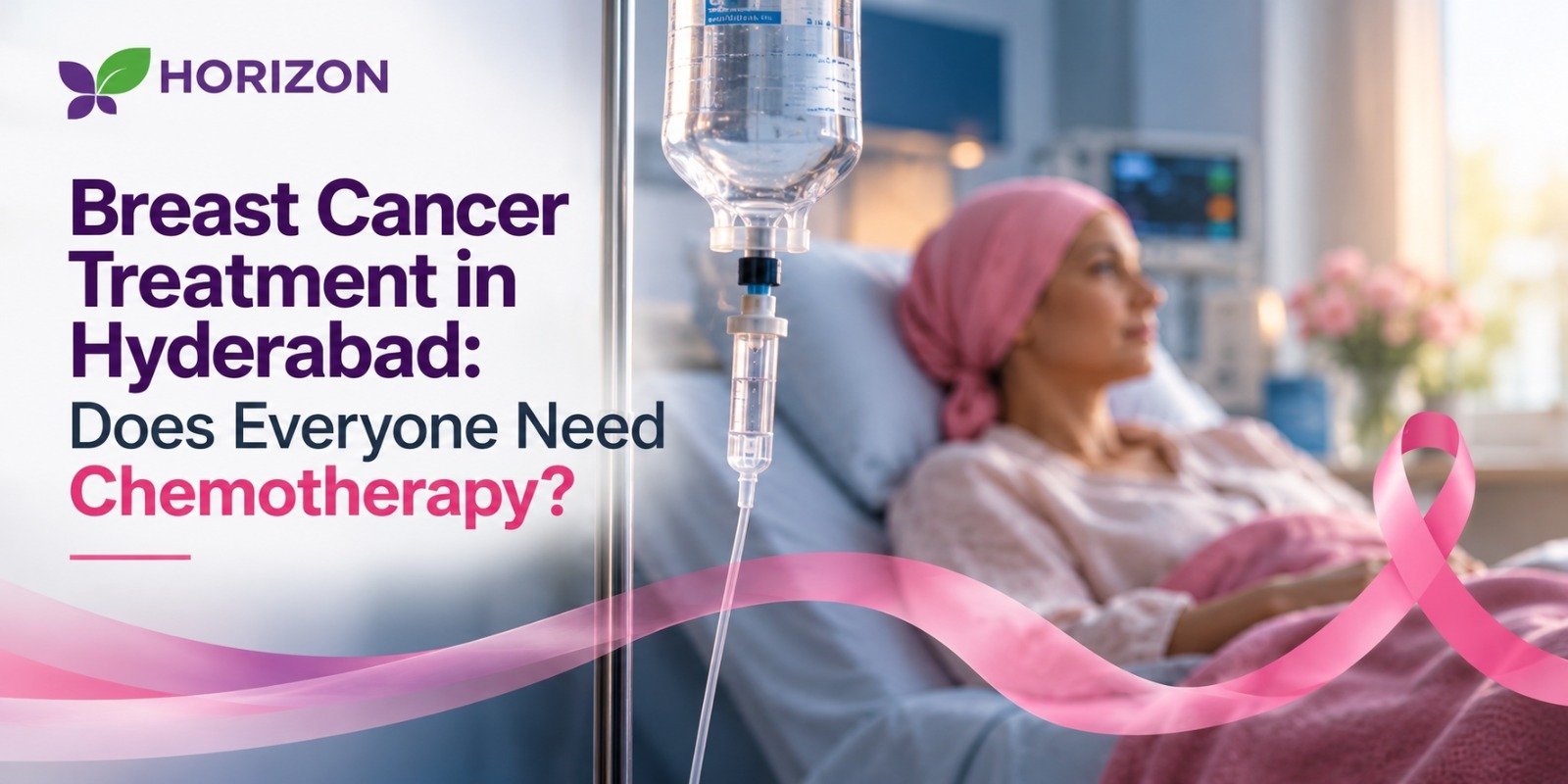
Within seconds of hearing the words “breast cancer,” most women ask the same thing: will I need chemotherapy? Behind that question sit others nobody says out loud. Will I lose my hair? Will I be able to work? Will I still feel like myself? This Breast Cancer Awareness Month, here is the honest picture of breast cancer treatment in Hyderabad and worldwide: some women still need chemotherapy for breast cancer, but treatment is becoming more tailored and, for a selected group, gentler.
We will also talk about something that gets far less attention than it deserves: the anxiety that comes with all of this, and what helps.
Does every breast cancer need chemotherapy?
No, and that has always been true. Breast cancer is not one disease. Your treatment plan depends mainly on three things:
- Hormone receptor status (ER/PR): whether the cancer is fed by oestrogen or progesterone
- HER2 status: whether the cancer carries too much of a growth protein called HER2
- Stage and grade: the size of the tumour, whether lymph nodes are involved, and how fast it is growing
Some cancers are treated mainly with hormone therapy. Some need targeted therapy. Many still need chemotherapy, and it remains highly effective when it is needed. The aim of modern treatment is not less treatment for everyone. It is the right amount of treatment for you.
Can some HER2-positive breast cancers be treated without chemotherapy?
Drugs aimed at HER2 have transformed results for these cancers over the last two decades. Researchers are now asking a careful question: can some women do just as well with breast cancer treatment without chemotherapy, or with less of it?
At the ESMO Breast Cancer Congress in Berlin in May 2026, a study called PHERGain-2 offered an early answer. It followed 396 women with small (5 to 30 mm) HER2-positive breast cancers that had not spread to the lymph nodes. Before surgery, they received two targeted drugs, pertuzumab and trastuzumab, with no chemotherapy. About 60 percent of them (236 women) had no cancer left in the tissue removed at surgery, and they carried on with targeted treatment alone. The researchers reported that quality of life was preserved.
Here are the caveats, because they matter. This was an early-phase study with no comparison group. It included only carefully selected, low-risk patients. Long-term recurrence results are still awaited. It is a promising direction, not a reason to turn down chemotherapy if your oncologist recommends it.
When chemotherapy is needed, is it getting easier?
For higher-risk HER2-positive cancers, a newer type of drug called an antibody–drug conjugate is changing the picture. In the DESTINY-Breast11 trial, trastuzumab deruxtecan (T-DXd, also known by the brand name Enhertu) followed by standard targeted treatment was compared with an older chemotherapy combination before surgery. More women had no cancer left at surgery with the newer approach (67.3 percent versus 56.3 percent), and serious side effects were lower. The US FDA approved it in May 2026 for stage II and III HER2-positive breast cancer.
Whether this, or any newer option, is right for you depends on your tumour and your stage. We go through that with you case by case.
How will my doctor decide what I need?
It starts with the biopsy. Receptor testing (ER, PR and HER2, done by a test called IHC) tells us what kind of breast cancer you have. Staging scans show how far it has spread. Together they decide your plan. At Horizon Cancer Care, no treatment path is proposed until this groundwork is complete, so you are never choosing between options blind.
Does gentler treatment also mean keeping my breast?
Often, yes. Where the tumour allows, breast conservation surgery (lumpectomy) removes the cancer with a clear margin while keeping the breast. Oncoplastic techniques help maintain its shape. Whether this is safe for you depends on the tumour’s size, its location and your own preference, and your surgeon will explain it after seeing your scans.
Why do I feel so anxious? Is this normal?
Yes. It is very common, and it is not a weakness. Indian hospital studies have found that roughly one in three women with breast cancer show significant anxiety or depression symptoms, and younger women tend to be affected more. Yet low mood is often brushed off as “natural” and goes untreated. It is common, but it is not something you simply have to endure.
The usual triggers are waiting for biopsy or scan results, fear of chemotherapy, worry about how your body will look after surgery, and concern for family, work and cost. Some things that help:
- Ask for your plan in writing, with dates. Uncertainty feeds anxiety.
- Bring a family member or friend to key appointments. Two sets of ears catch more.
- Go easy on late-night searching. Numbers online rarely match your situation.
- Tell your care team if poor sleep, low appetite or low mood lasts more than a couple of weeks.
- Tell your family what actually helps. Sometimes it is company, not advice.
At Horizon Cancer Care, counsellors are available on a consultation basis. Whenever you or your family feel you need someone to talk to, tell your doctor or care team and we will arrange it.
Who will be treating me?
Breast cancer care at Horizon Cancer Care in Banjara Hills, Hyderabad, is led by Dr. Srinivas Prasad Perla, a senior surgical oncologist and breast cancer surgeon with over 20 years of experience and an MCh gold medallist, trained at WIA Adyar, CMC Vellore, Kidwai Memorial Institute of Oncology and Osmania Medical College. You see the senior surgeon yourself, and we aim to get you seen quickly. Where your case needs medical oncology, radiation or genetic evaluation, we coordinate all services.
Where do I start?
If you have a new diagnosis, are weighing treatment options, or want a second opinion before starting chemotherapy, call Horizon Cancer Care at 9573605000 (Monday to Saturday, 8 am to 8 pm; Sunday by appointment) or visit horizoncancercare.com to book a consultation at our centre in Banjara Hills, Hyderabad.
Frequently Asked Questions
Does every woman with breast cancer need chemotherapy?
No. Some cancers are treated with surgery plus hormone therapy or targeted therapy alone. Others do need chemotherapy. Your hormone receptor status, HER2 status and stage decide this.
What does HER2-positive mean, and why does it matter?
HER2-positive means the cancer cells carry too much of a growth-driving protein called HER2. It matters because specific targeted drugs act on HER2 and work very well for these cancers. A simple test on your biopsy tissue tells us your HER2 status.
What is a “pathological complete response”?
It means no active cancer cells are found in the tissue removed at surgery after treatment given before surgery. It is a good sign, and researchers use it to help decide how much further treatment a patient needs. It does not replace your oncologist’s overall plan.
Is it normal to feel anxious or low during breast cancer treatment?
Yes, it is very common, and it can be treated. Talk to your doctor or care team if worry, poor sleep or low mood keeps going for more than a couple of weeks. Our counsellors are available on consultation whenever you need them.
Can I preserve my breast if I have breast cancer?
Often, yes. Breast-conserving surgery with oncoplastic techniques is an option for many women, depending on tumour size, location and your preference. Your surgeon will confirm whether it is safe for you after reviewing your scans.