What Should I Eat After Cancer Surgery? A South Indian Diet Guide
Coming home after cancer surgery can bring a lot of questions about food.
Your mother may suggest ragi ganji. A neighbour may recommend turmeric milk. Someone else may have an opinion about whether curd is “cold” for the body. Everyone means well, but when you are recovering from cancer surgery, you need clear and practical guidance.
So, what should you actually eat?
At Horizon Cancer Care in Banjara Hills, Hyderabad, our surgical oncology and nutrition teams understand that food is an important part of recovery. While there is no single diet that works for every cancer patient, choosing nutritious, protein-rich, easily tolerated foods can help support the body’s recovery after surgery.
Why Is Nutrition Important After Cancer Surgery?
Cancer surgery places considerable stress on the body. During recovery, your body needs adequate energy, protein, fluids, vitamins, and minerals to support tissue repair and maintain strength.
Good nutrition does not replace cancer treatment or medical care, but it can support the healing process.
A diet after cancer surgery should therefore focus on:
- Adequate protein
- Sufficient calories and energy
- Good hydration
- Vitamins and minerals
- Foods that are easy to tolerate
- Safe food preparation
Your nutritional requirements can vary depending on the type of cancer, surgery performed, treatment plan, appetite, digestion, and other health conditions. Therefore, a personalised cancer recovery diet is often more useful than following a generic food chart.
Can I Get Enough Protein Without Eating Meat?
Yes.
Protein is one of the most important nutrients during recovery because it provides the building blocks needed for tissue repair and maintaining muscle strength.
If you are vegetarian, many familiar Indian foods can provide protein.
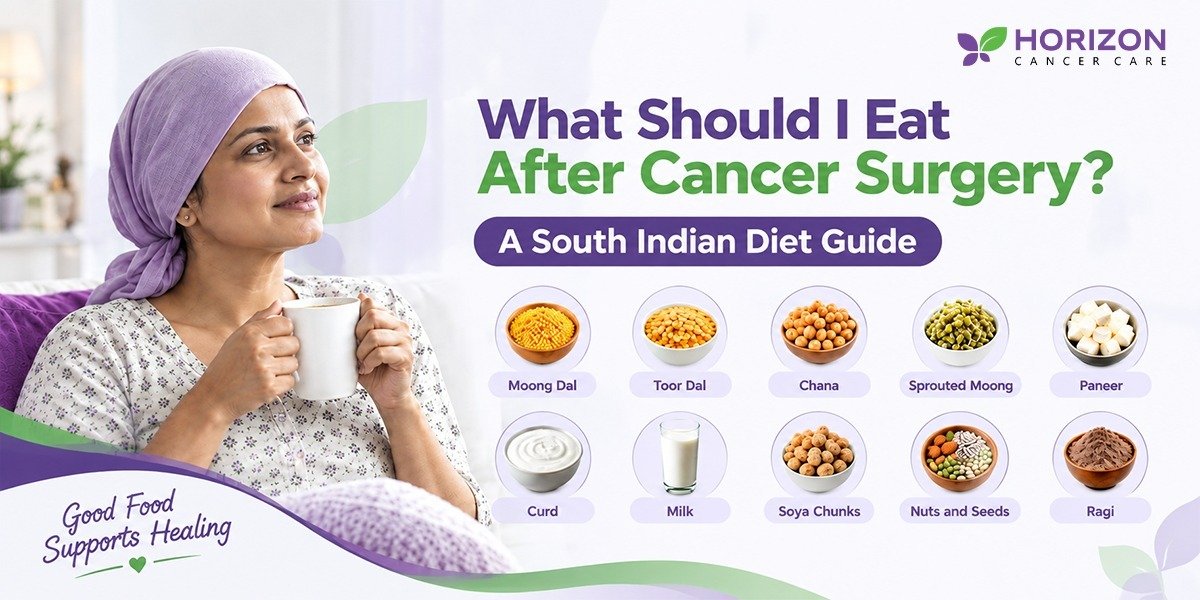
Vegetarian protein sources
- Moong dal
- Toor dal
- Chana
- Sprouted moong
- Paneer
- Curd
- Milk
- Soya chunks
- Nuts and seeds
- Ragi
If you eat non-vegetarian foods, eggs, fish, and lean chicken can also be included when appropriate.
Rather than consuming a large amount of protein in only one meal, try to include a protein source across your meals and snacks.
For example, dal with lunch, curd or paneer with another meal, and milk or another suitable protein-rich food later in the day can help distribute protein intake.
If your appetite is poor, an oncology dietician can help you increase protein without making meals excessively large.
Is Ghee or Coconut Oil Okay After Cancer Surgery?
You generally do not need to completely eliminate traditional cooking fats unless your doctor has advised otherwise.
Small amounts of ghee or coconut can be included as part of a balanced diet. The bigger concern is frequent consumption of heavily fried, highly processed foods and foods prepared with repeatedly heated oil.
Instead of relying on bakery snacks, chips, deep-fried foods, and processed snacks, focus more on fresh, home-cooked meals.
For patients who eat fish, options such as sardines can provide omega-3 fatty acids. Vegetarian sources such as flaxseeds and walnuts can also provide healthy fats.
However, dietary requirements can differ for patients with diabetes, kidney disease, heart conditions, digestive problems, or other medical conditions.
Can I Eat Rasam and Curd Rice After Cancer Surgery?
For many patients, familiar South Indian foods can be practical choices during recovery.
Foods such as:
- Idli
- Pongal
- Moong dal khichdi
- Curd rice
- Rasam
- Soft dosa
- Well-cooked vegetables
may be easier to tolerate during the early stages of recovery.
Rasam can be useful when appetite is reduced because its flavour may make food more appealing. However, if your stomach is sensitive, reduce chilli and heavy seasoning.
Curd can also be included by many patients if it is fresh, safely prepared, and well tolerated.
If you have undergone surgery involving the stomach, intestine, mouth, throat, or digestive system, your food choices may need to be modified. In such cases, follow the specific dietary instructions provided by your surgical and nutrition team.
Which Vitamins and Minerals Are Important During Recovery?
A varied diet can provide many nutrients required during recovery.
Vitamin C
Vitamin C contributes to normal collagen formation and wound healing. Good food sources include:
- Guava
- Amla
- Oranges
- Other citrus fruits
Vitamin A
Vitamin A contributes to normal immune function and maintenance of tissues. Carrots, pumpkin, and cooked leafy vegetables can be useful sources of vitamin A or its precursors.
Zinc
Zinc contributes to normal immune function and tissue repair. Sesame seeds, groundnuts, legumes, and ragi can contribute zinc to the diet.
Fibre
Fibre can support digestive health, but the appropriate amount depends on your surgery and bowel function.
If your digestive system is sensitive, well-cooked vegetables and soft fruits may initially be easier to tolerate than large quantities of raw salads.
What Foods Should I Avoid or Limit After Cancer Surgery?
There is no universal list of foods that every cancer patient must avoid. Your diet should depend on your surgery, treatment, digestive health, and medical advice.
However, some foods may be worth limiting during early recovery.
Very Spicy Foods
If your stomach or digestive system is sensitive, reduce chilli and heavy tempering until your digestion improves.
High-Sodium Foods
Pickles, papads, packaged snacks, instant foods, and other high-sodium products should generally be limited, particularly if your doctor has advised you to reduce salt.
Deep-Fried and Highly Processed Foods
Fried snacks and heavily processed foods may provide excess calories without supplying the protein and micronutrients needed during recovery.
Alcohol
Alcohol may interact with medicines and may not be appropriate during cancer recovery. Follow your oncologist’s advice regarding whether and when it is safe to consume alcohol.
Unsafe or Poorly Handled Foods
Food safety is especially important for some patients whose immunity may be weakened by cancer treatment. Your healthcare team may recommend precautions regarding raw foods, unpasteurised products, and food preparation.
How Should I Plan Meals During the First Few Weeks?
Your appetite may not immediately return to normal after surgery. Some people also experience early fullness, nausea, taste changes, or digestive discomfort.
Instead of forcing yourself to eat three large meals, smaller and more frequent meals may be easier to manage.
A simple post-surgery nutrition plan could include:
Breakfast:
Idli with mild chutney and curd, or soft pongal.
Mid-morning:
Banana, papaya, or another well-tolerated fruit.
Lunch:
Rice with dal, cooked vegetables, and curd.
Evening:
Milk, a suitable smoothie, or a protein-rich snack.
Dinner:
Moong dal khichdi, soft dosa, or another easily tolerated meal.
If solid food is difficult to manage, a suitable smoothie or nutritional drink may sometimes help increase your nutritional intake.
Your actual meal plan should be adjusted according to your surgery and how well you tolerate different foods.
Is Ragi Good After Cancer Surgery?
Ragi is a familiar South Indian food and can be included as part of a balanced recovery diet for many patients.
It provides nutrients such as calcium, iron, and fibre. Ragi ganji may also be easy to consume for some patients during the early recovery period.
However, ragi should not be considered a complete meal by itself, particularly when your protein requirements are increased.
Combining it with an appropriate protein source, such as milk or another suitable food, can make the meal more balanced.
If you have digestive restrictions following surgery, discuss the suitability of ragi with your dietician.
Do I Need Supplements After Cancer Surgery?
Not every patient needs a multivitamin or nutritional supplement after surgery.
Some patients may need supplements because of:
- Vitamin or mineral deficiencies
- Poor appetite
- Weight loss
- Treatment-related nutritional problems
- Increased nutritional requirements
Depending on the individual, a doctor or dietician may recommend nutrients such as vitamin D, vitamin B12, iron, or a protein supplement.
It is important not to start high-dose vitamins, minerals, herbal products, or other supplements without discussing them with your cancer care team.
What If I Have Poor Appetite or Am Losing Weight?
Loss of appetite and unintended weight loss can occur during cancer treatment and recovery.
If eating has become difficult, speak with your cancer care team rather than waiting until you become significantly weaker.
An oncology dietician may recommend:
- Smaller meals more frequently
- Higher-protein foods
- Nutrient-dense snacks
- Appropriate nutritional drinks
- Texture modifications
- Changes in meal timing
- Foods that are easier to tolerate
The goal is not simply to eat more. It is to make your meals as nutritionally useful as possible while keeping them comfortable and manageable.
Why Personalised Nutrition Matters After Cancer Surgery
Every cancer patient has a different recovery journey.
The nutritional requirements of someone recovering from breast cancer surgery may differ from those of a patient recovering from gastrointestinal, head and neck, pancreatic, or other cancer surgery.
The type of surgery, treatment received, digestive function, appetite, weight, nutritional status, and other medical conditions all influence dietary recommendations.
This is why a personalised cancer nutrition plan can be more useful than following general advice from the internet or from people around you.
About Horizon Cancer Care
Horizon Cancer Care is a doctor-led oncology hospital located in Banjara Hills, Hyderabad, founded and led by Dr. Srinivas Prasad Perla, Senior Surgical Oncologist.
The centre focuses on evidence-based and personalised cancer care, with services spanning cancer surgery, chemotherapy, immunotherapy, targeted treatments, diagnosis and staging, coordinated radiation therapy, and supportive care. Its approach includes multidisciplinary treatment planning and attention to organ preservation when medically appropriate.
Horizon Cancer Care operates from a dedicated oncology facility designed for focused cancer treatment, including surgical infrastructure, chemotherapy and day-care oncology services, inpatient care, and postoperative monitoring.
For patients recovering from cancer surgery, nutrition and supportive care can form an important part of the overall recovery journey.
About Dr. Srinivas Prasad Perla
Dr. Srinivas Prasad Perla is a Senior Surgical Oncologist and Founder of Horizon Cancer Care, Banjara Hills, Hyderabad. He holds an M.S. and M.Ch. in Surgical Oncology and has more than two decades of experience in surgical oncology.
He completed his medical training at institutions including Gandhi Medical College, Osmania Medical College, Cancer Institute (WIA), Adyar, CMC Vellore, and Kidwai Memorial Institute of Oncology. He has also held senior clinical positions at institutions including MNJ Institute of Oncology, CARE Hospitals, American Oncology Institute, and Continental Hospitals.
His surgical oncology practice covers a broad range of cancers, including head and neck cancers, breast cancer, gastrointestinal cancers, thoracic and oesophageal cancers, hepato-biliary and pancreatic cancers, genitourinary cancers, gynaecological cancers, sarcomas, and other complex oncological conditions. His experience also includes minimally invasive oncology surgery.
A South Indian Diet Can Be Part of Your Cancer Recovery
Recovering from cancer surgery does not necessarily mean giving up the foods you grew up eating.
Dal, idli, pongal, curd rice, rasam, ragi, vegetables, fruits, paneer, eggs, and fish can all have a place in a balanced recovery diet when they are appropriate for your individual condition.
The key is to focus on:
Adequate protein + sufficient energy + hydration + nutrient-rich foods + food safety + individual tolerance.
Most importantly, nutrition should complement—not replace—your cancer treatment and medical follow-up.
If you or a family member is recovering from cancer surgery and needs guidance on a personalised diet after cancer surgery, speak with your oncologist or qualified oncology dietician.
Frequently Asked Questions
Can I eat curd rice after cancer surgery?
For many patients, curd rice can be a comfortable and easy-to-eat option. However, whether it is appropriate depends on the type of surgery, digestive tolerance, food safety requirements, and your overall treatment plan.
Is ragi good for post-surgery recovery?
Ragi can be included as part of a balanced diet and provides nutrients including calcium, iron, and fibre. Ragi ganji may be suitable for some patients, but it should be combined with appropriate protein and other nutritious foods rather than relied upon as a complete meal.
When can I start eating spicy South Indian food again?
There is no single timeline that applies to everyone. It depends on the type of surgery and how your digestive system is recovering. If spicy foods cause discomfort, reduce the chilli and gradually reintroduce them as tolerated and as advised by your care team.
Can a vegetarian patient get enough protein after cancer surgery?
Yes. Dal, paneer, curd, milk, soya, sprouts, chana, nuts, and seeds can all contribute protein. If your appetite is low or your protein requirements are higher, an oncology dietician can help create a practical meal plan.
Should I take a multivitamin after cancer surgery?
Not necessarily. Some patients require specific supplements because of nutritional deficiencies, treatment-related issues, or poor dietary intake. Your doctor or dietician can determine whether supplementation is appropriate based on your individual needs.
Need Personalised Cancer Nutrition Guidance?
If you or a family member is recovering from cancer surgery and needs professional guidance on post-surgery nutrition, cancer recovery diet, or diet after cancer surgery, speak with the team at Horizon Cancer Care.
Horizon Cancer Care
Plot No. 723, Axis Bank Lane, Near City Centre Signal, Road No. 1, Banjara Hills, Hyderabad – 500034
Phone: +91 95736 05000
Email: info@horizoncancercare.com
Website: horizoncancercare.com
Suggested SEO Keywords:
diet after cancer surgery, cancer recovery diet, post-surgery nutrition, cancer nutrition, diet for cancer patients, food after cancer surgery, South Indian diet after cancer surgery, nutrition after cancer surgery, cancer care in Hyderabad, cancer treatment in Hyderabad, surgical oncologist in Hyderabad, cancer hospital in Banjara Hills, oncology hospital in Hyderabad, Dr. Srinivas Prasad Perla, Horizon Cancer Care Hyderabad.